In this guide
A jar on the counter. A little time. A tangy, creamy ingredient that makes an ordinary breakfast feel like something to look forward to.
Meet milk kefir.
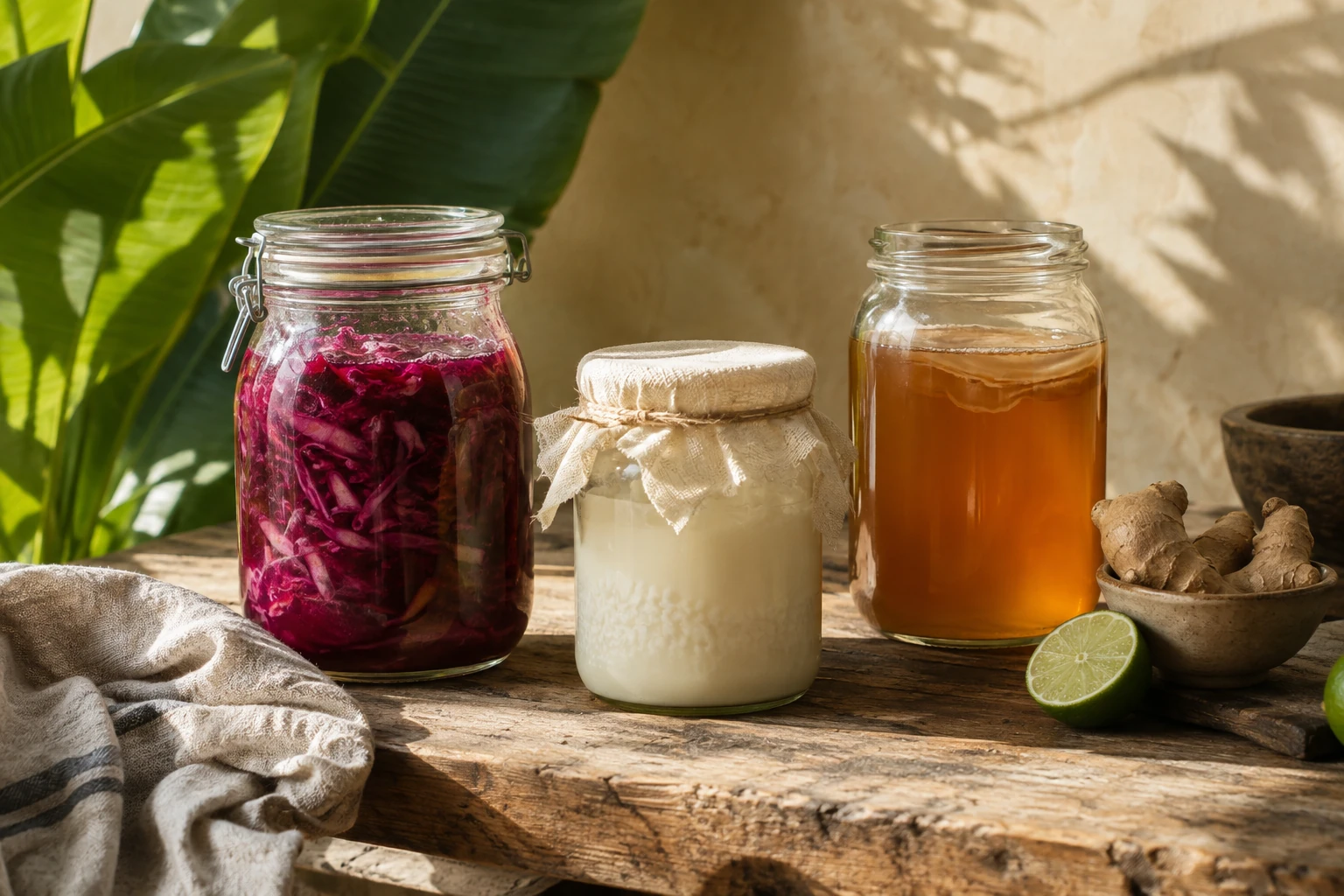
Milk kefir is made with a living community of bacteria and yeasts. The culture's little clusters are known as grains, although they aren't cereal grains. University of Florida overview ↗
This guide brings the practical process and its wider story together. Read all the way through, or jump straight to the part you are curious about.
A living tradition.
There is something compelling about a culture that can be cared for, used again, and passed along. The next jar begins with a little of the one before it.
Something to care for.
Learning a ferment means getting to know the culture at its heart.
Something to practise.
A repeated routine becomes a way of noticing small changes.
Something to share.
The story continues in the meals we make and the questions we pass on.
A simple kitchen ritual, learned a little at a time.
What happens in the jar?
The microorganisms change the milk as they grow. Kefir's mixture of bacteria and yeasts helps distinguish it from yoghurt. Fermentation, however, is not a guarantee of a particular health outcome. Read the food-science overview ↗
At Fermentropics, we keep the recipe and the research in conversation. We also leave room for what a study does not establish.
Explore the science of fermentationA simple milk kefir.
A small batch, a living culture, and a method to get to know.
- Makes
- 2 cups
- Culture
- Milk kefir grains
- Ferment
- 18–24 hours
- Source range
- 18–29°C
Ingredients
Tick as you prepareSet out your equipmentClean jars · strainer · spoon · cloth or coffee filter · thermometer
The method
Prepare
Wash hands and clean your equipment.
Combine
Add grains and milk to a clean jar. Stir gently; secure a cloth or coffee-filter cover.
Ferment
Following CSU Extension: 18–24 hours at 18–29°C, away from light. Expect slight thickening and a tangy aroma.
Strain
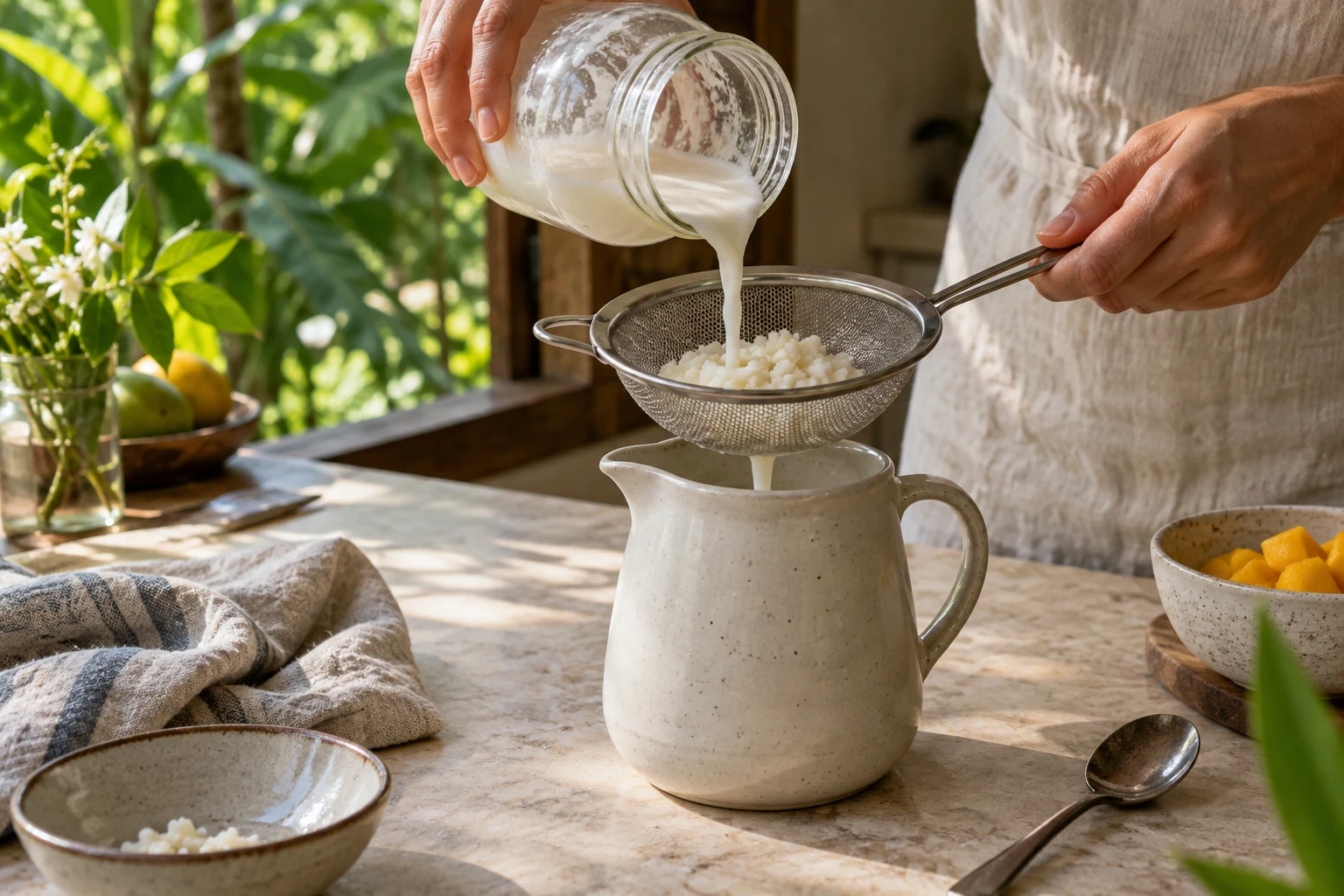
Separate the grains using a strainer. Keep them for the next batch; refrigerate the finished kefir promptly.
Adapted from CSU Extension's method. Consult the complete source for preparation and handling. This is a design preview, not a Fermentropics-tested recipe.
In a tropical kitchen.
Start with a thermometer. The source recipe's conditions matter more than the phrase “room temperature.” If your kitchen is outside the specified range, arrange a suitable space rather than inventing a shorter fermentation time.
A few good questions.
Can I swap milk kefir grains for water kefir grains?
They are different cultures. Use the culture and ingredients specified by your method; this page is for milk kefir.
How do I know which instructions to follow?
Begin with the complete source recipe and the instructions for your active culture. If instructions conflict, resolve that before beginning.
What should I put in my batch notes?
The recipe source, start time, measured temperature, and anything you changed. Keep safety-critical instructions fixed.
How might I serve it?
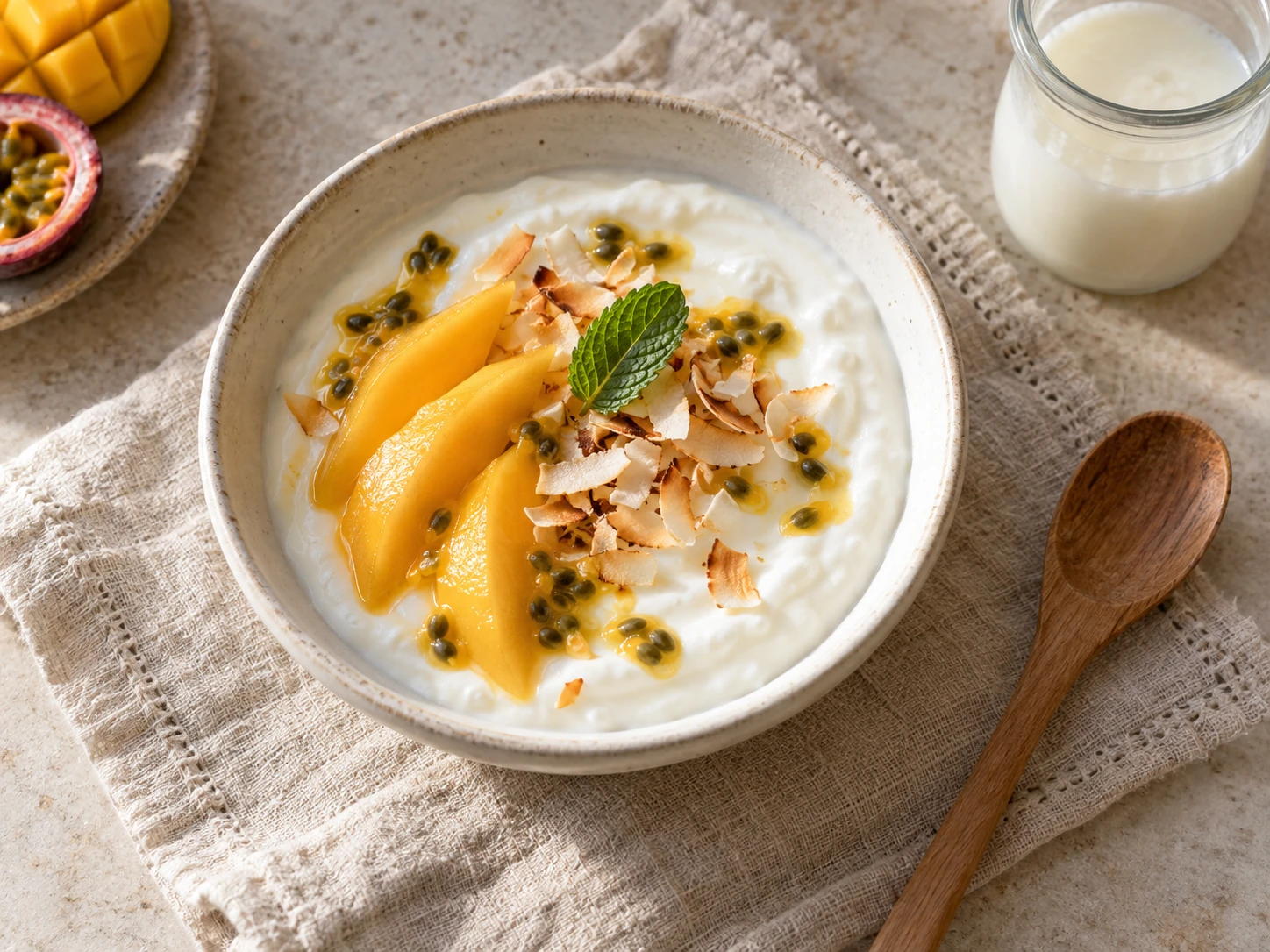
Try prepared kefir with fruit and toasted coconut. Our tropical breakfast bowl is an easy serving idea: see the recipe.
Care comes first.
Don't taste a questionable ferment to decide whether it is safe. When something seems wrong, stop and consult reliable food-safety guidance.
Sources & further reading
- CSU Extension ↗ — Ingredients and method.
- University of Florida IFAS ↗ — Kefir: background and food safety.
- ISAPP ↗ — Fermented foods and the meaning of probiotic.