In this story
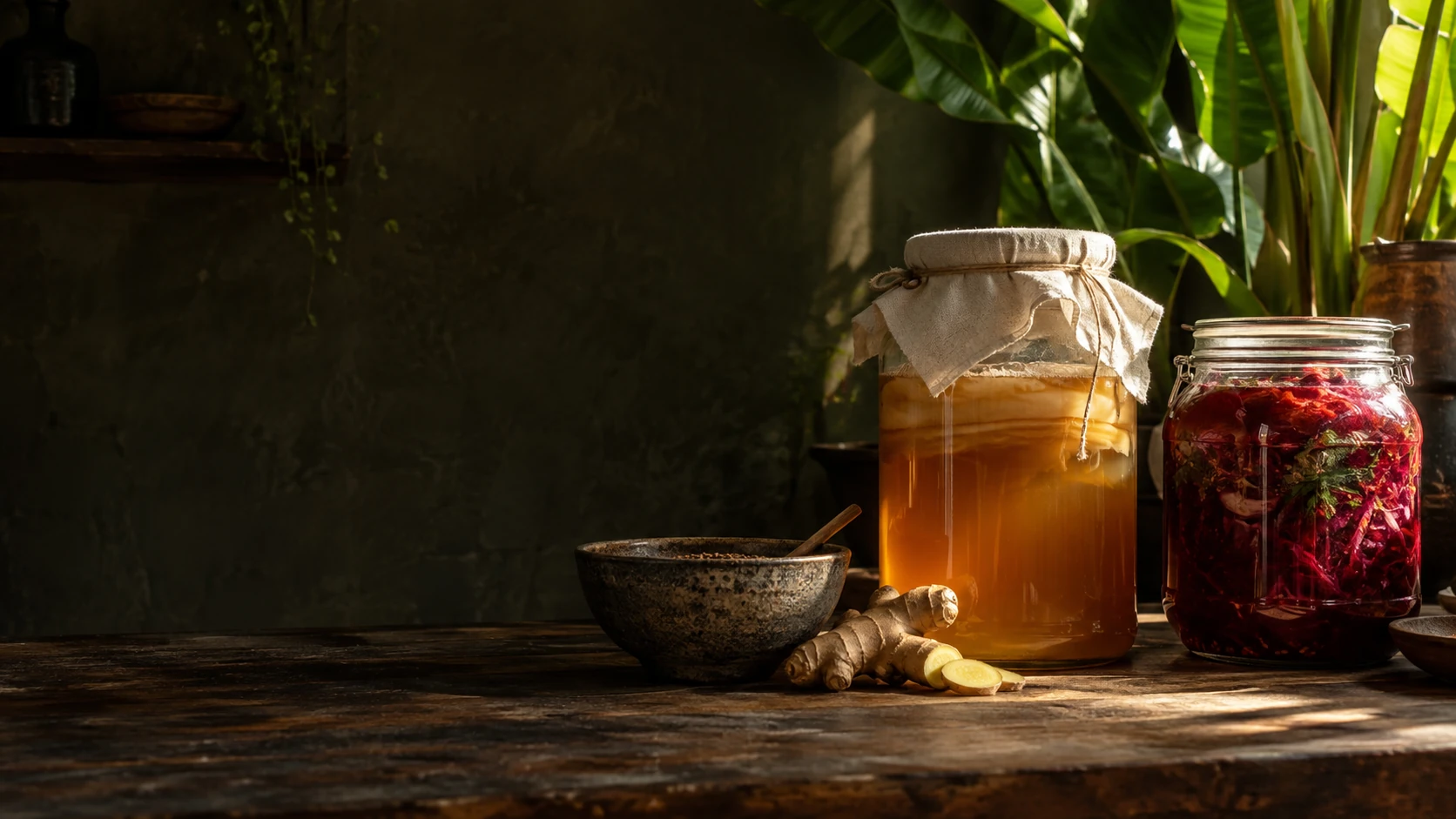
A familiar ingredient goes into a jar. Something less familiar happens inside it. Fermentation begins with that wonderful change in perspective.
A transformation, with company.
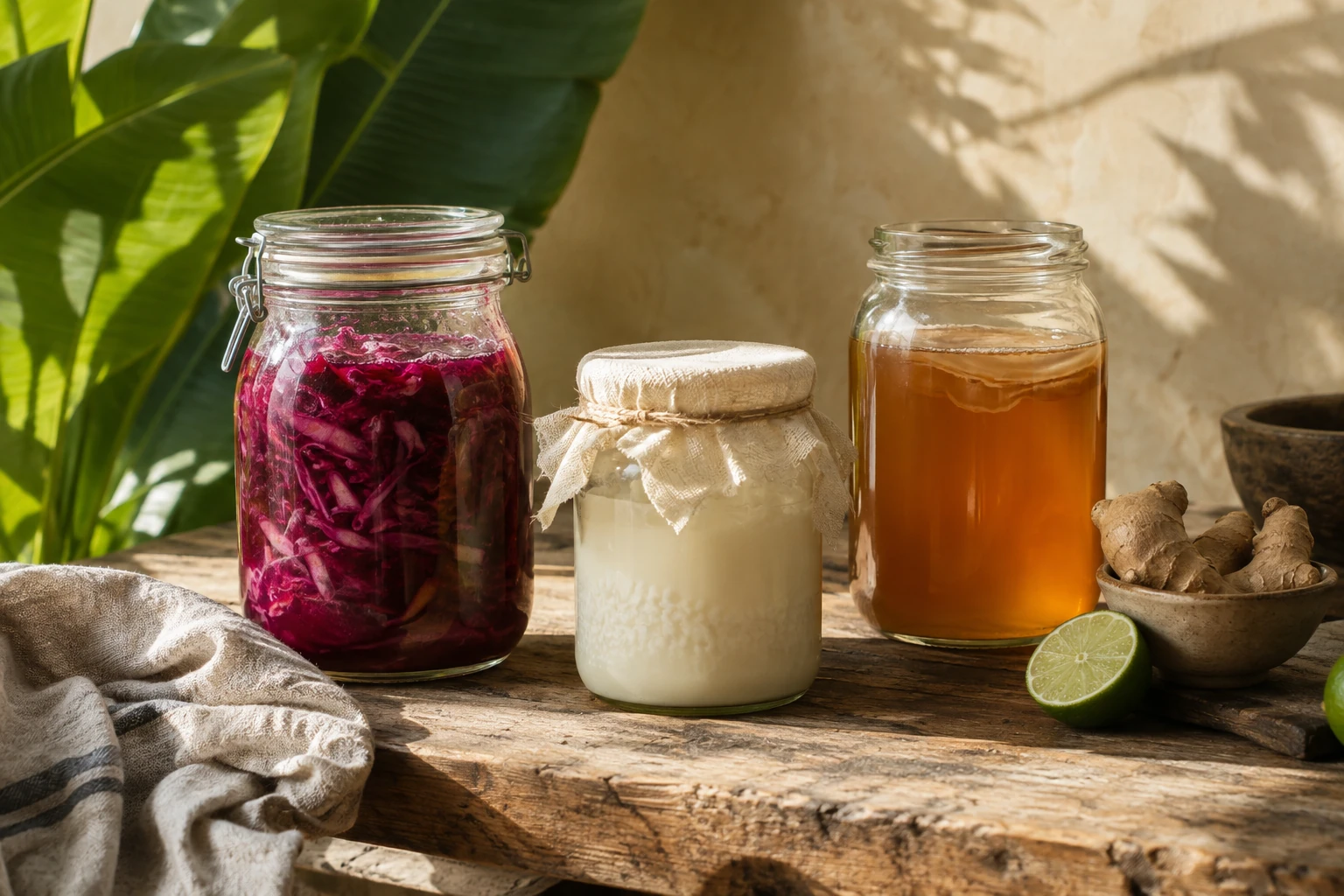
Fermentation involves the growth of microorganisms and the changes their enzymes bring about in food. The ISAPP consensus definition gives us a useful starting point: this is a process, rather than a promise about how a food will affect your health.
The questions get more interesting when we become specific. Which food? Which organisms? Which conditions? A loaf of bread and a jar of cultured milk both have fermentation stories, but those stories are not interchangeable.
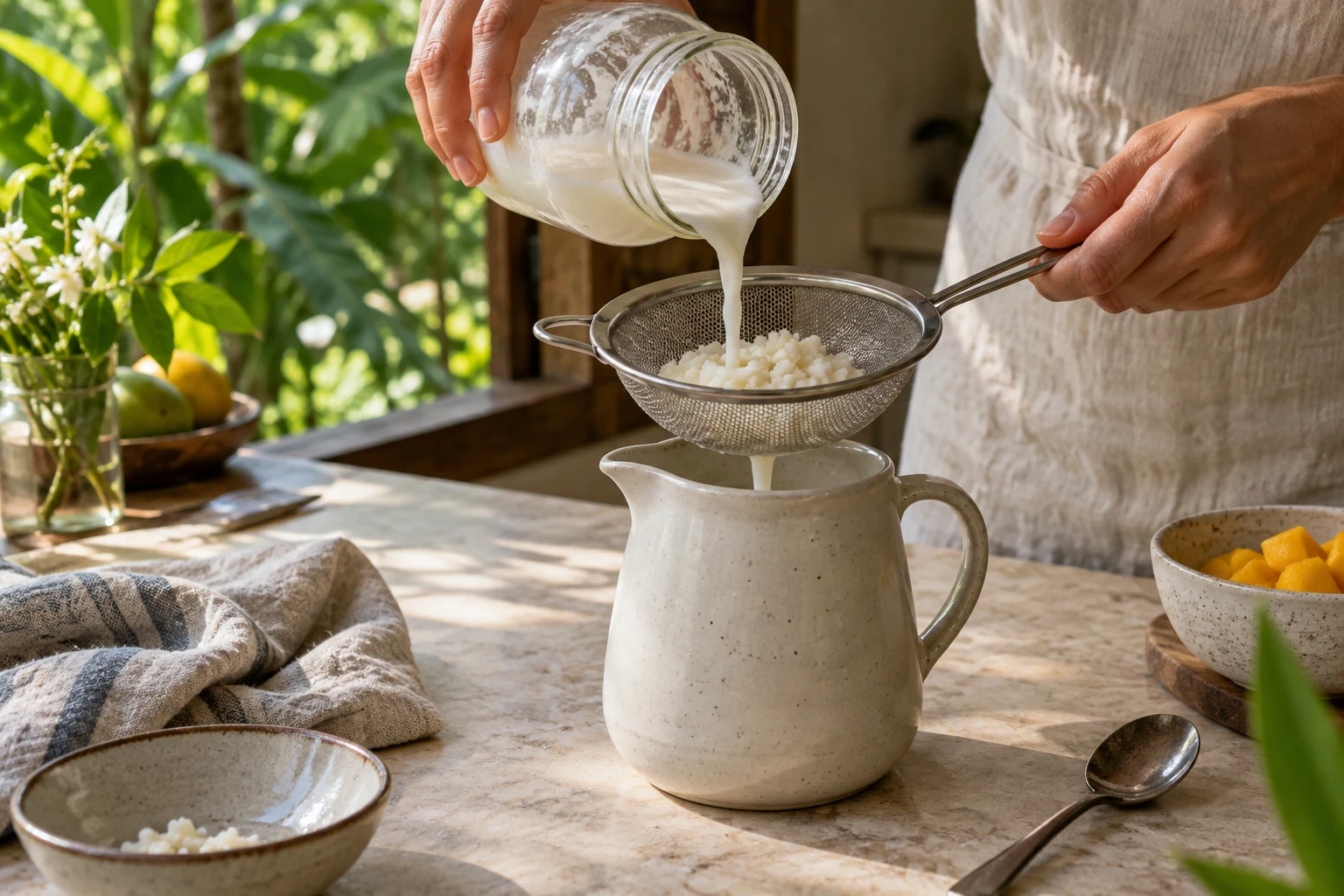
A familiar process. A whole world to understand.
Three terms worth separating.
| The term | What it tells us | What to ask next |
|---|---|---|
| Fermented food | How a food was made. | What happened during the process? |
| Live microorganisms | Organisms remain alive when consumed. | Was the food heated or otherwise treated? |
| Probiotic | A specific evidence-based designation. | Which organisms, amount, and demonstrated benefit? |
A fermented food does not necessarily contain living microorganisms when we eat it. And “fermented” does not automatically mean “probiotic.” Those distinctions help us read labels and research with a little more care.
A good explanation makes room
for a better next question.
Curiosity, with a reference.
When we discuss a scientific finding, we want the source to stay close to the statement. We also want to know what was actually studied. A result about a particular culture cannot simply be applied to every homemade jar.
You don't need to become a microbiologist to enjoy fermentation. A little vocabulary helps you recognise a useful explanation, an unanswered question, and a claim that needs more support.
Sources & further reading
- ISAPP expert consensus on fermented foods ↗ — Definition and scientific context.
- Do fermented foods contain probiotics? ↗ — A guide to the distinctions.