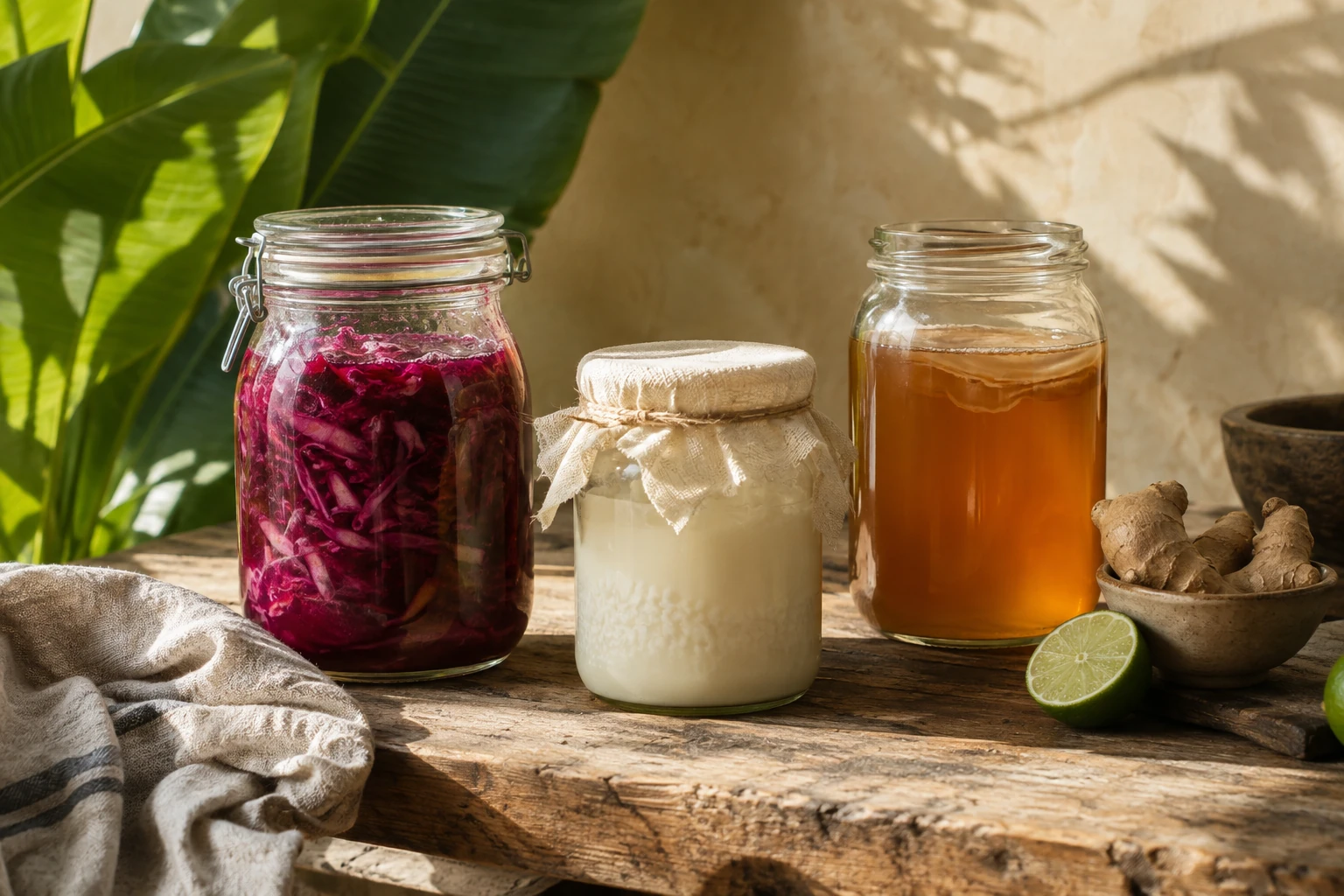
In this story
Food is something we make and eat. It is also something we inherit: a set of habits, a way of paying attention, a conversation across generations.
Making room for another perspective.
Traditional Chinese food wisdom is one of the perspectives we want to explore at Fermentropics. It brings questions about preparation, balance, and the context of a meal into the conversation.
Our interest is cultural and culinary. What language do people use to describe food? How do those ideas shape a kitchen routine? What can we learn by listening carefully, without turning a tradition into a universal prescription?
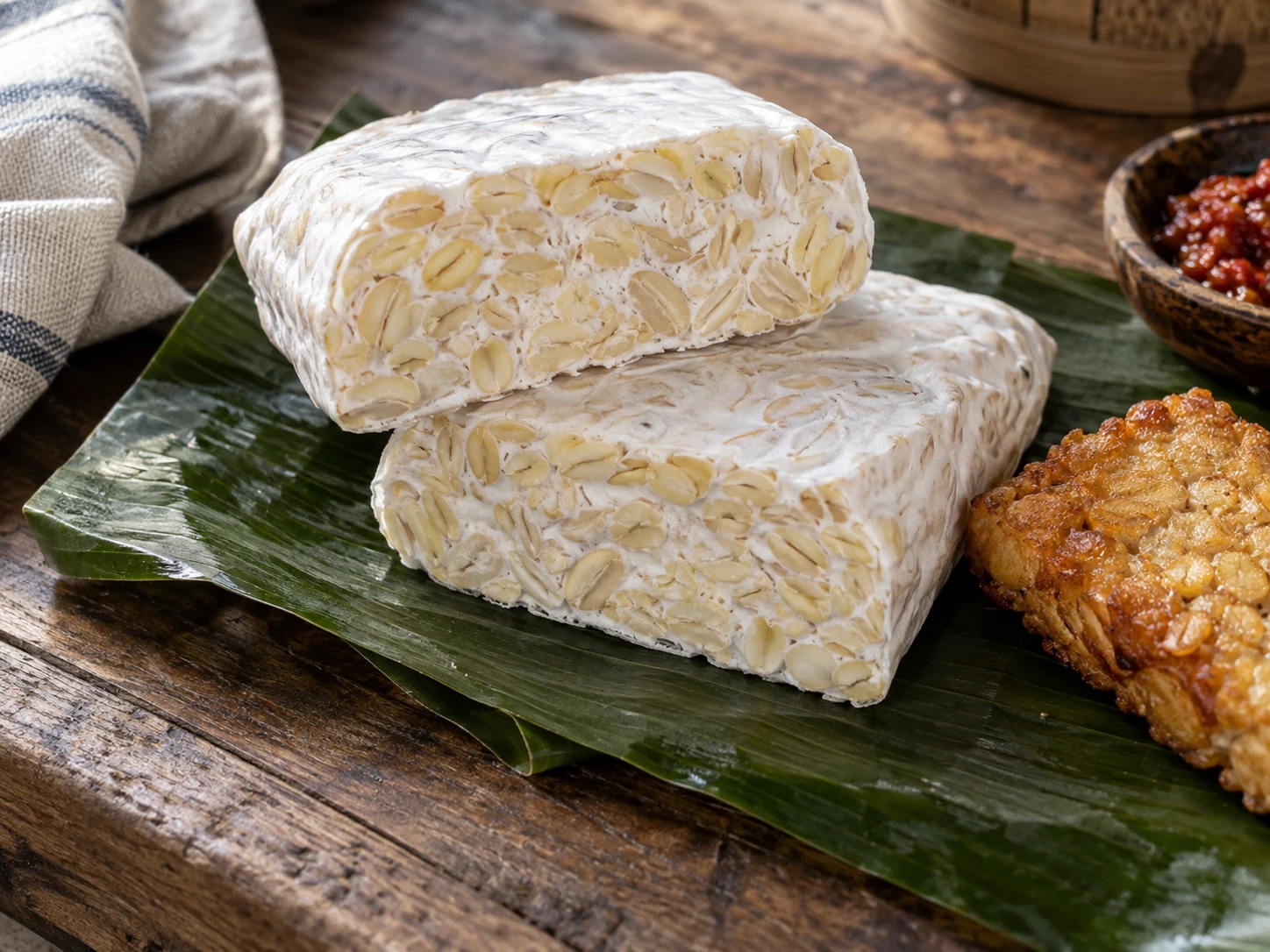
What we make. How we serve it. The stories we bring to the table.
Let each lens speak for itself.
| A scientific question | A cultural question |
|---|---|
| What changes during fermentation? | How is this food understood in a tradition? |
| What does the available evidence show? | What words, customs, and preparations surround it? |
| What are the limits of this finding? | Whose perspective are we describing? |
The point is to make the distinction readable. You should always be able to tell whether a paragraph is explaining a measured process, describing an inherited idea, or sharing a personal observation.
Bring the conversation back to the table.
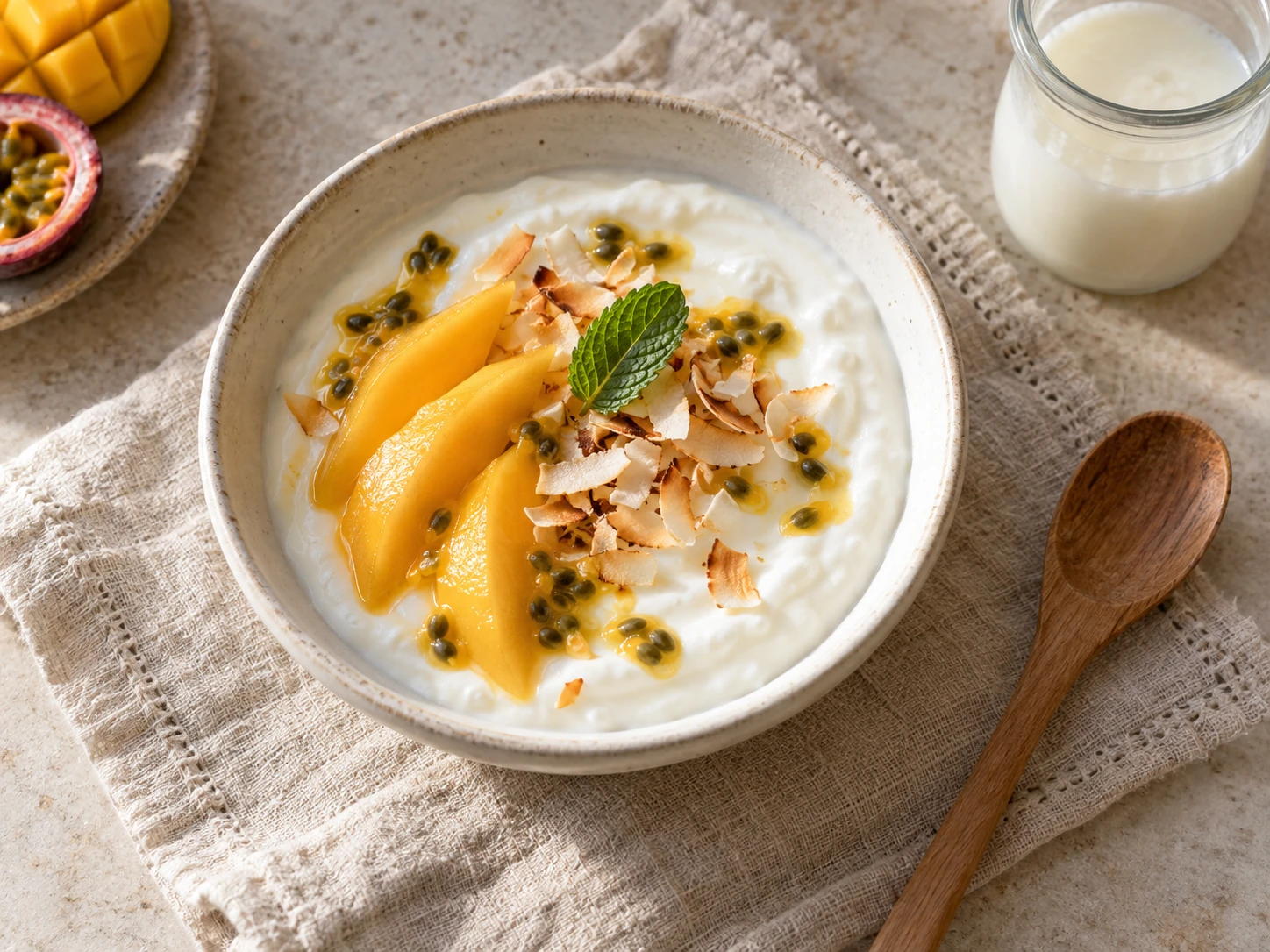
A bowl of kefir with mango can begin several conversations. We can talk about the culture that made it, the flavour of the fruit, the way we serve it, or the place of cultured foods in our routines.
Those conversations don't have to collapse into one answer. Sometimes the most useful thing a food story can offer is a more thoughtful question.
One food can hold more than one story.
For a broad overview of TCM and the evidence around its practices, the NCCIH introduction is a useful point of reference. Our food articles do not offer diagnosis or individual health advice.
Sources & further reading
- NCCIH: Traditional Chinese Medicine ↗ — Background, research, and the scope of the evidence.