In this story
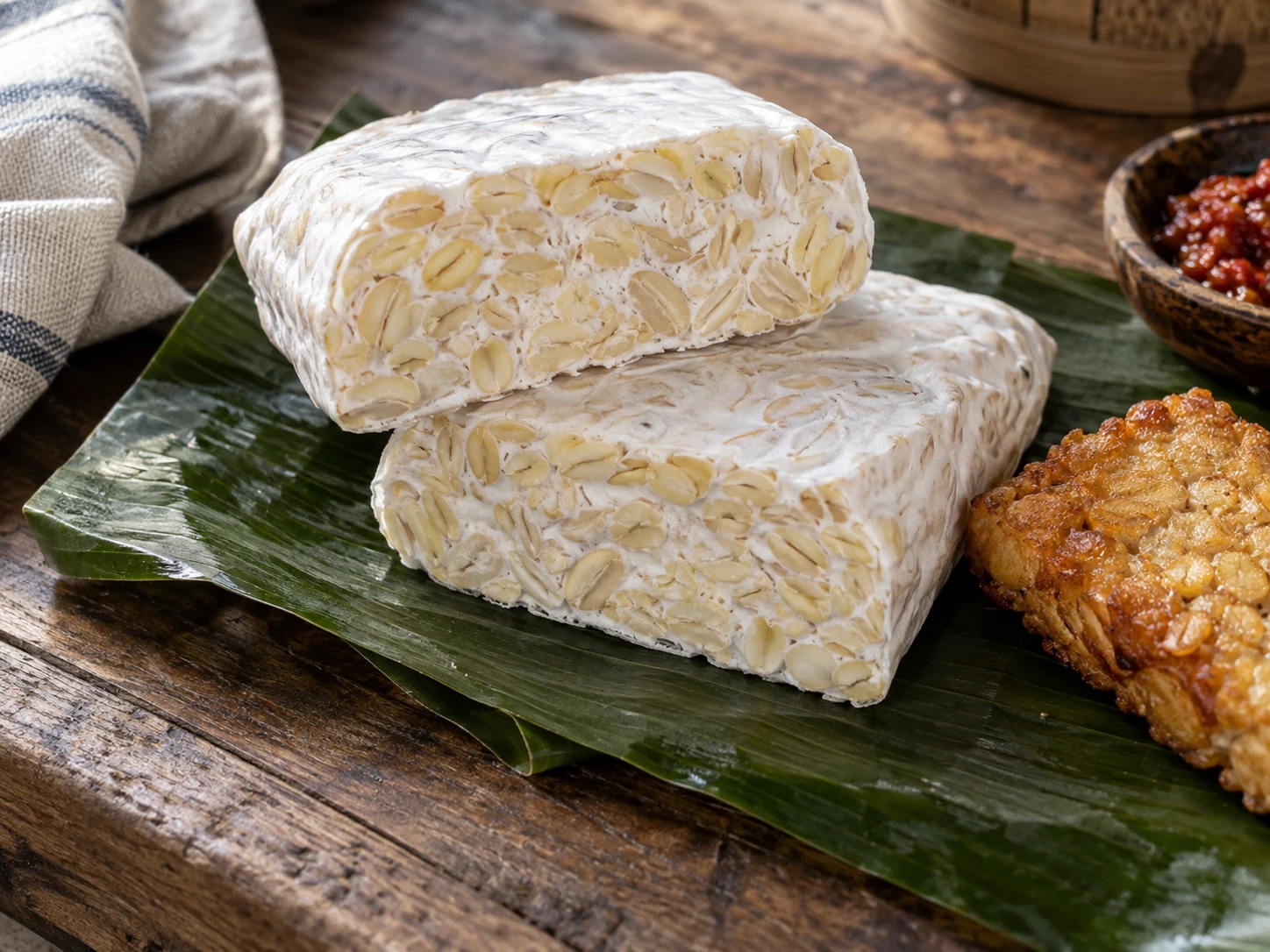
Some foods feel so familiar that we forget to look at them. A piece of tempeh is a lovely reason to pause.
Look a little closer.
Before the pan, before the sambal, before the first bite: the pale surface, the pattern of beans, the firmness when you cut a slice. There is already a story in the texture.
For this kitchen journal, that moment of attention matters. Fermentation is not only the unusual jar we decide to start at home. It can also be a way to become curious about foods already on our table.
Start with the person who makes it.
A market visit is a good invitation to ask questions. How do they like to cook it? What should you look for when buying it? What do they wish more people understood about their work?
A future story might follow a maker through a working morning. It might trace one family's favourite preparation, or compare the ways an ingredient appears in different kitchens. These are stories best told with the people who know them.
Familiar is a beautiful place to begin.
And then, your own table.
Try describing an everyday ingredient before describing what you do with it. Its shape. Its smell. Its surface. The words can be simple. The attention is the point.
We want Fermentropics to make room for this kind of food writing alongside the practical guides: a little observation, a little conversation, and a reason to return to the kitchen.
More from food culture