In this story
Most of us don't have a fermentation cellar. We have a kitchen counter, the afternoon light, and whatever the weather is doing.
That is a good place to begin. Fermentation can make us more attentive to ordinary things: where the sun falls, how warm a room becomes, and how a familiar ingredient changes over time.
Begin where you are.
In a Malaysian kitchen, “leave it at room temperature” raises another question: whose room? A shaded corner in the morning can feel quite different from the same space after lunch.
Before making a new ferment, get to know the place you plan to keep it. A simple thermometer and a few notes give you a more useful starting point than a guess about the weather outside.
A little attention to temperature.
Different ferments call for different conditions. The temperature range in a tested recipe is part of the method, alongside the ingredients and equipment.
Think of temperature as something to observe and manage, rather than a reason to race the clock. Find an appropriate environment for the ferment you have chosen before you start.
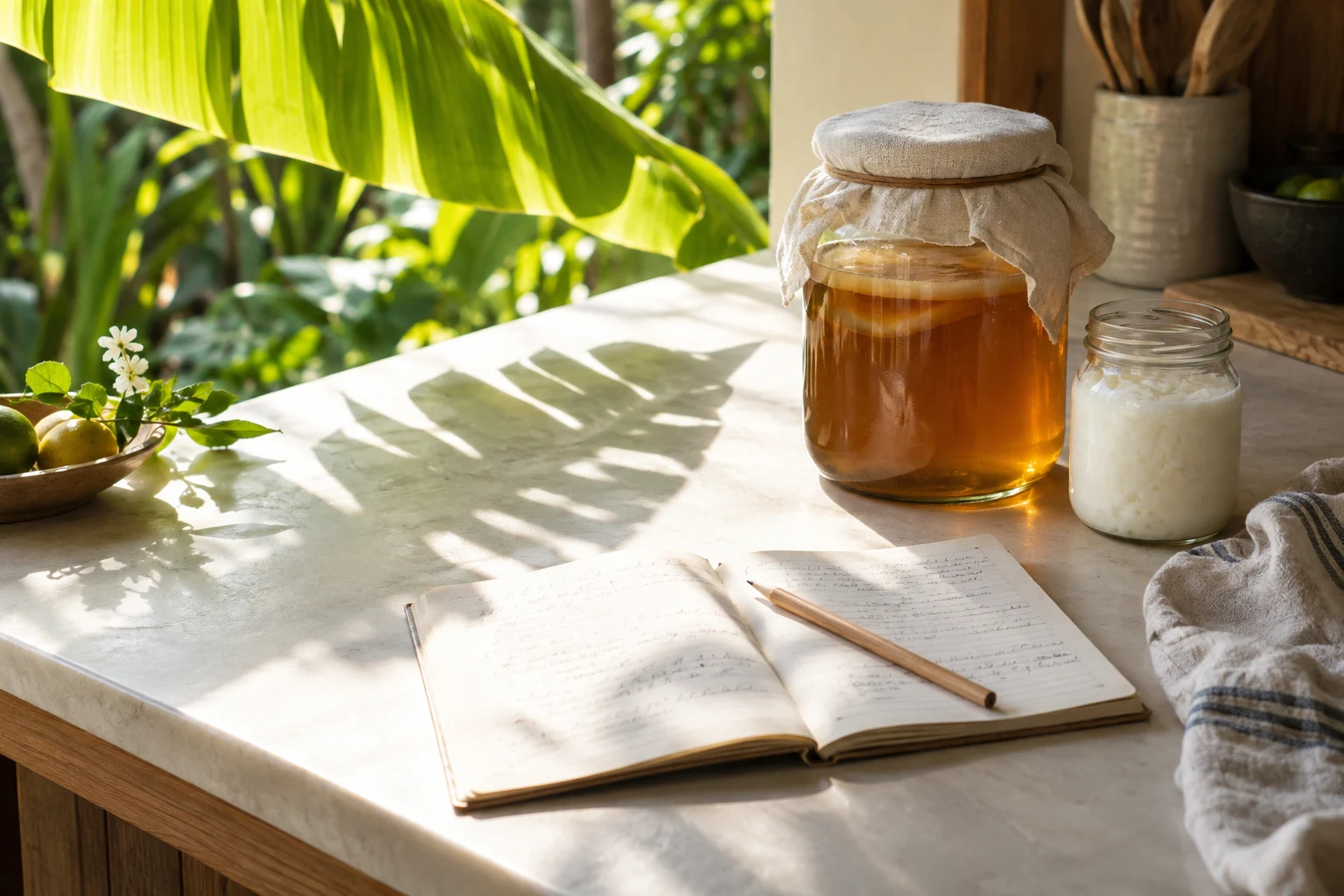
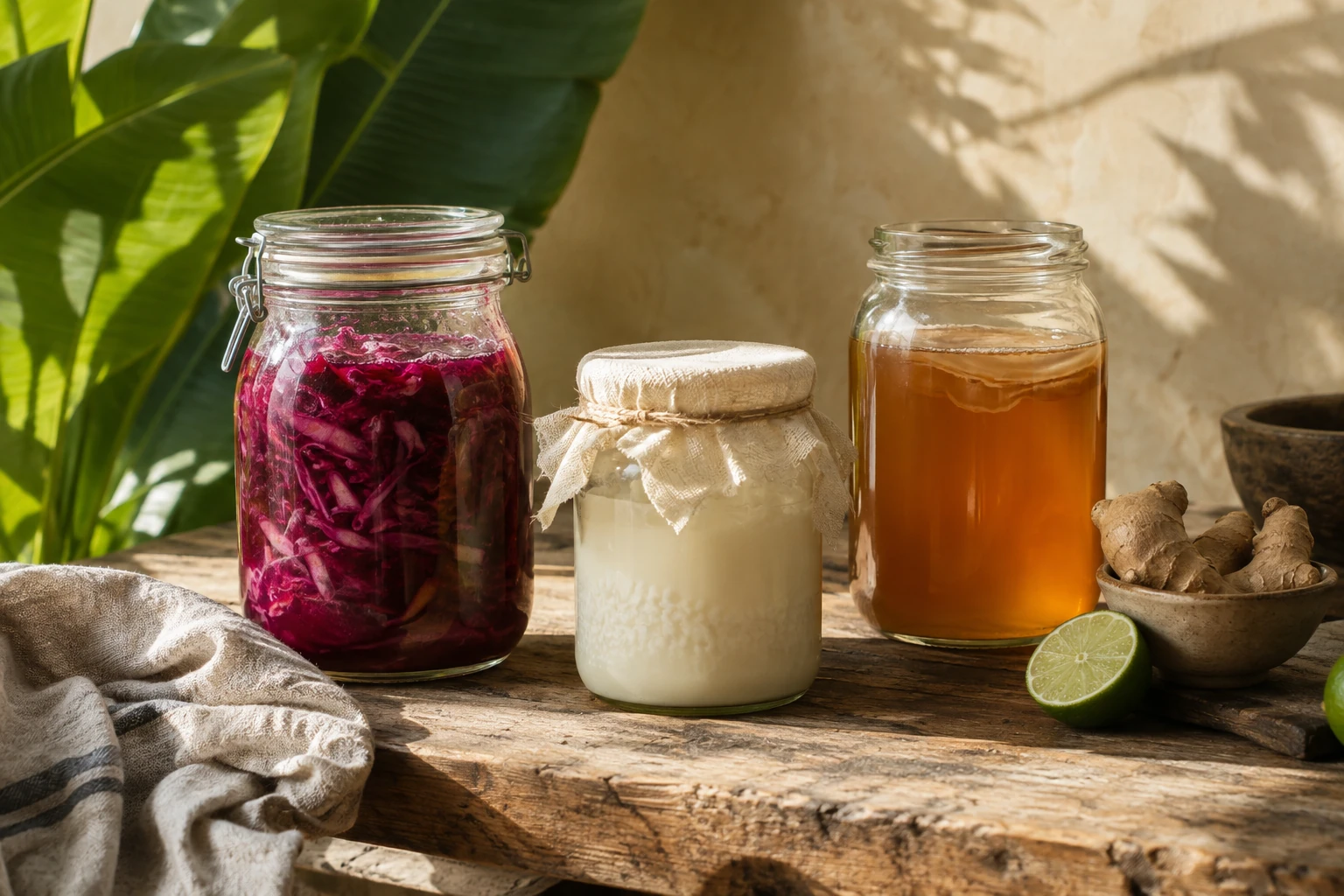
Notice the light. Measure the conditions. Find a little corner that works for your ferment.
Build a kitchen rhythm.
There is pleasure in a small, repeatable ritual. Keep the recipe nearby. Write down when you started. Notice what you did, rather than relying on what you remember doing.
Start with a trusted method.
Check the specified conditions.
Keep a simple batch record.
Write down what you learned.
A useful batch note can be very short: the recipe, the ingredients, the room temperature, and the start time. It gives your future self something to learn from.
A THOUGHT TO TAKE INTO YOUR KITCHENA tropical kitchen has its own rhythm.
The first step is to notice it.
Work with what is around you.
Our markets are full of possibilities. Ginger, familiar vegetables, local fruit, and everyday staples invite all kinds of kitchen questions. Start by finding a tested method for the ingredient you want to explore.
Curiosity and care belong together. Follow a recipe's safety-critical ingredients and handling instructions; flavour experiments can wait until you understand the process.
Find a good place to begin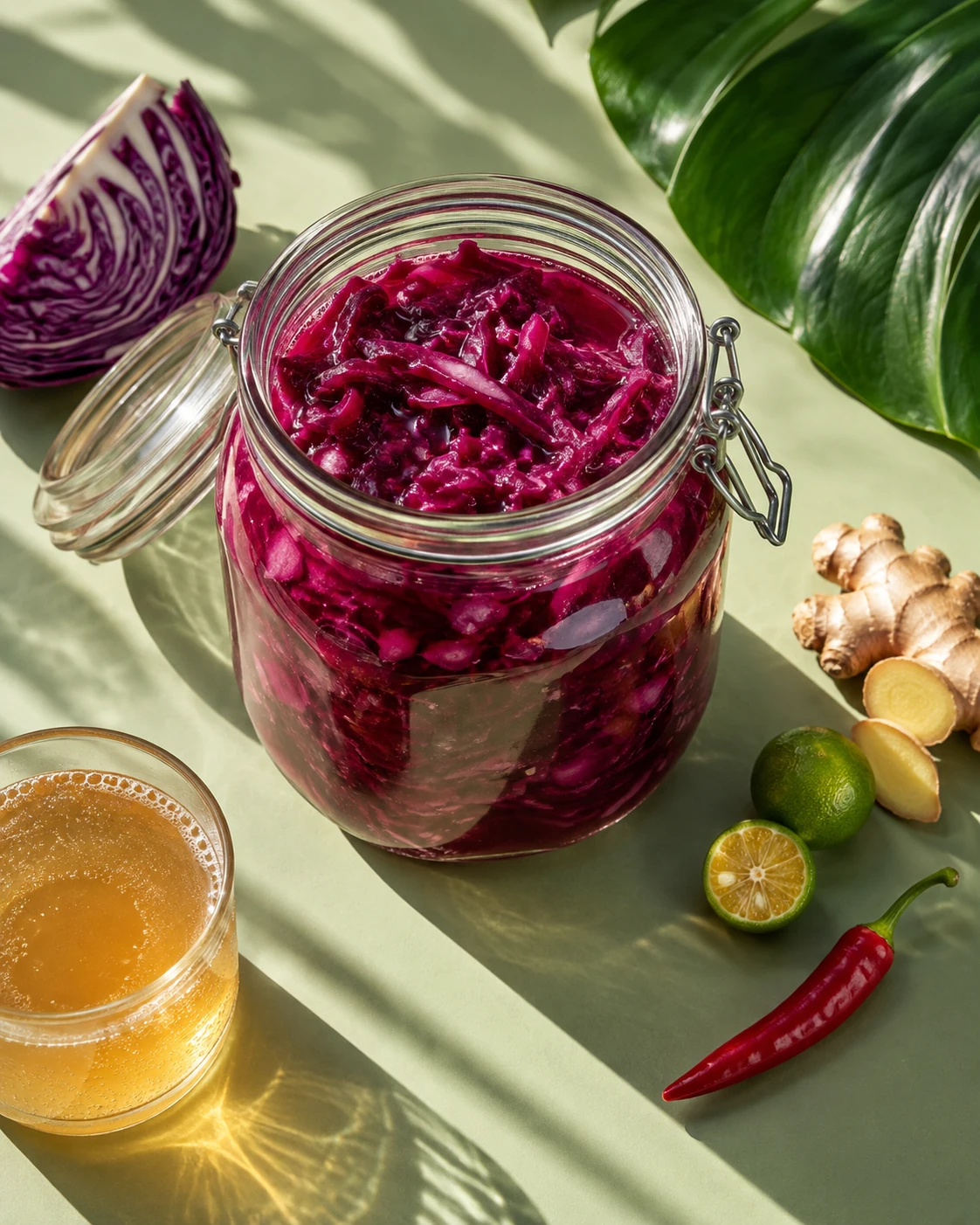
Make room
for your first jar.
Begin here Sources & further reading
- National Center for Home Food Preservation ↗ — Sauerkraut: temperature, method, and handling.
- Colorado State University Extension ↗ — Understanding and making kefir.