In this guide
The cabbage is ordinary. The patience, the attention, and the transformation make it something else.
Three ingredients, including time.
A sauerkraut guide is a good place to see the relationship between a recipe and its conditions. The method below points to the tested National Center for Home Food Preservation recipe. Read that complete source before beginning.
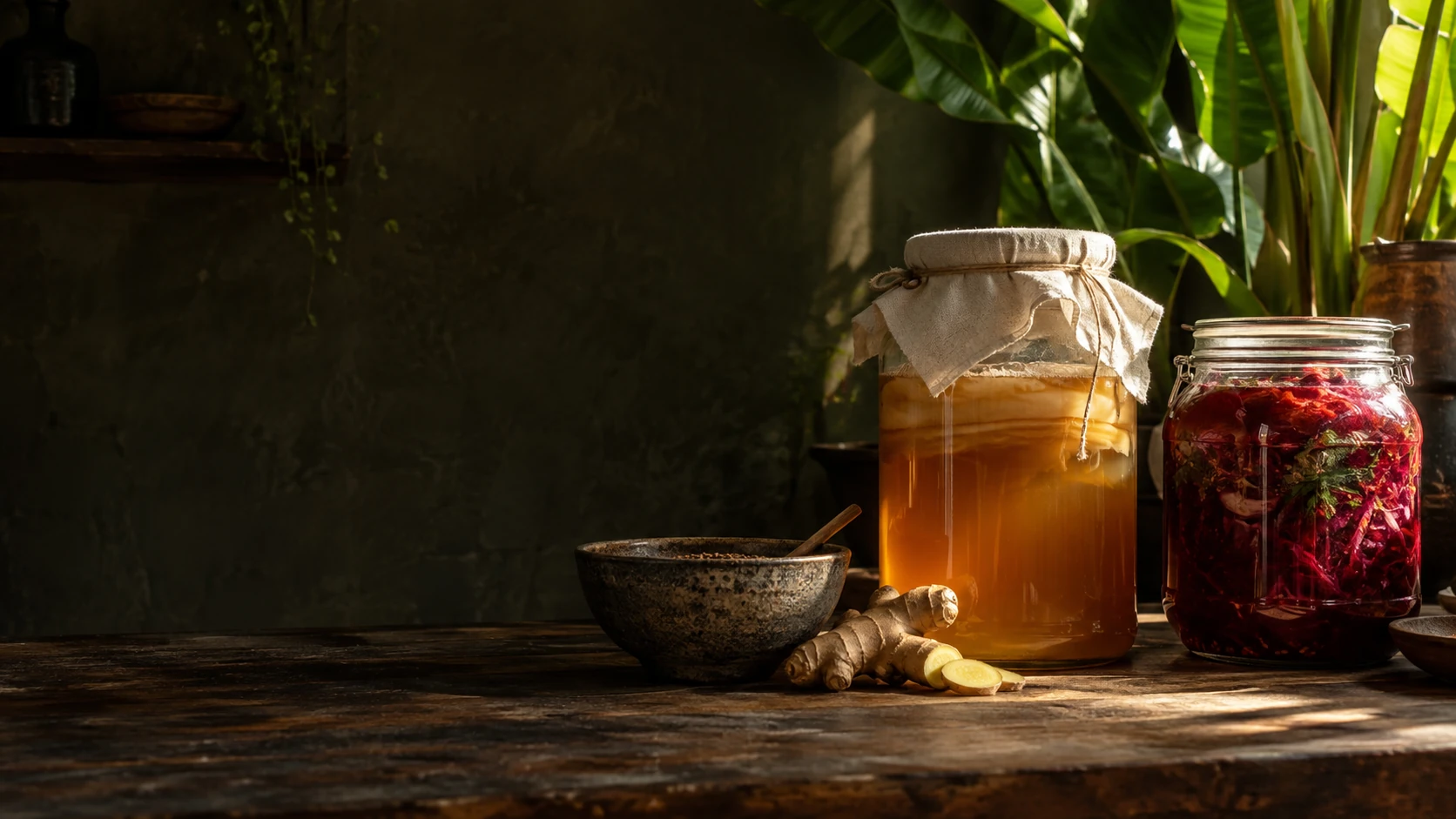
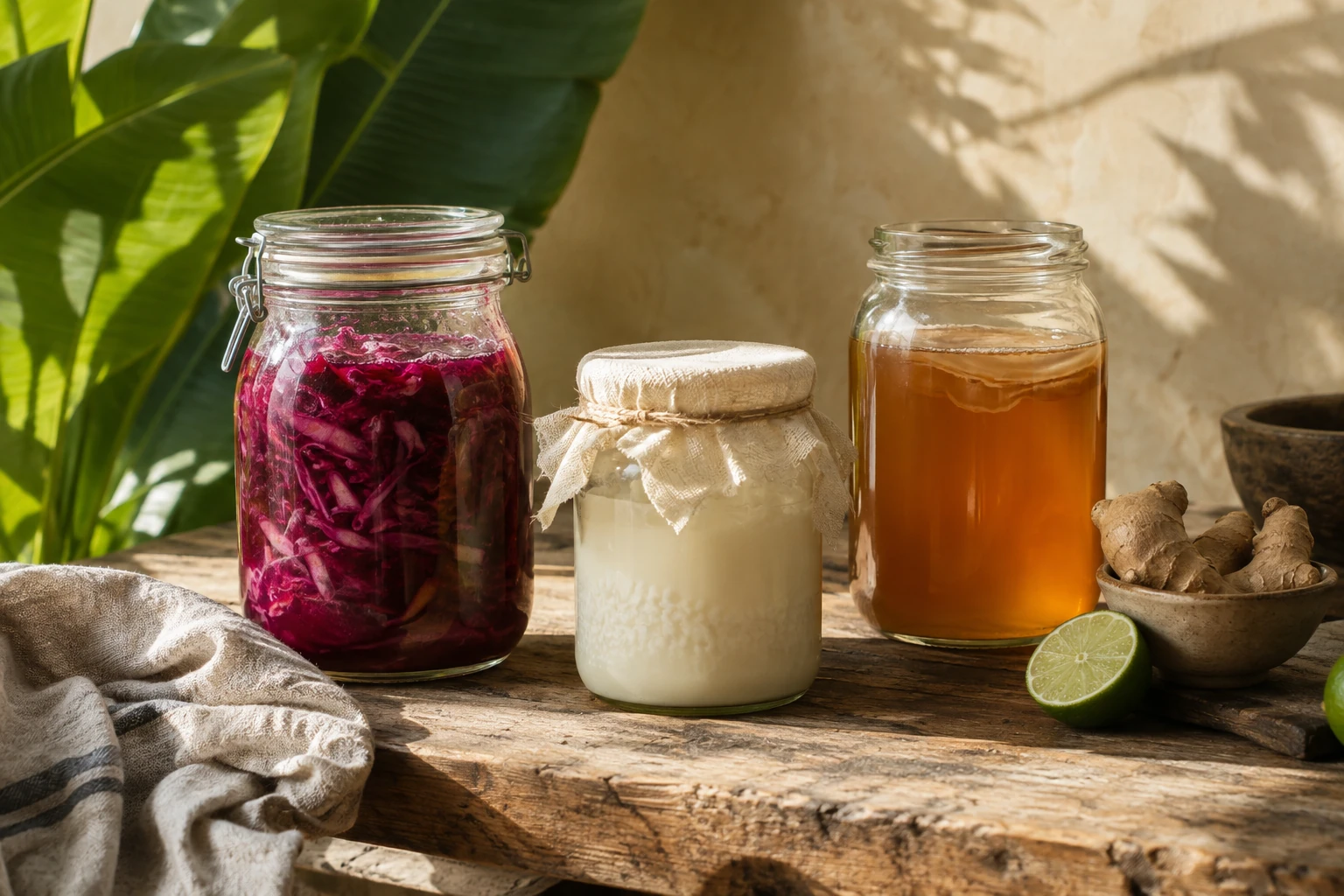
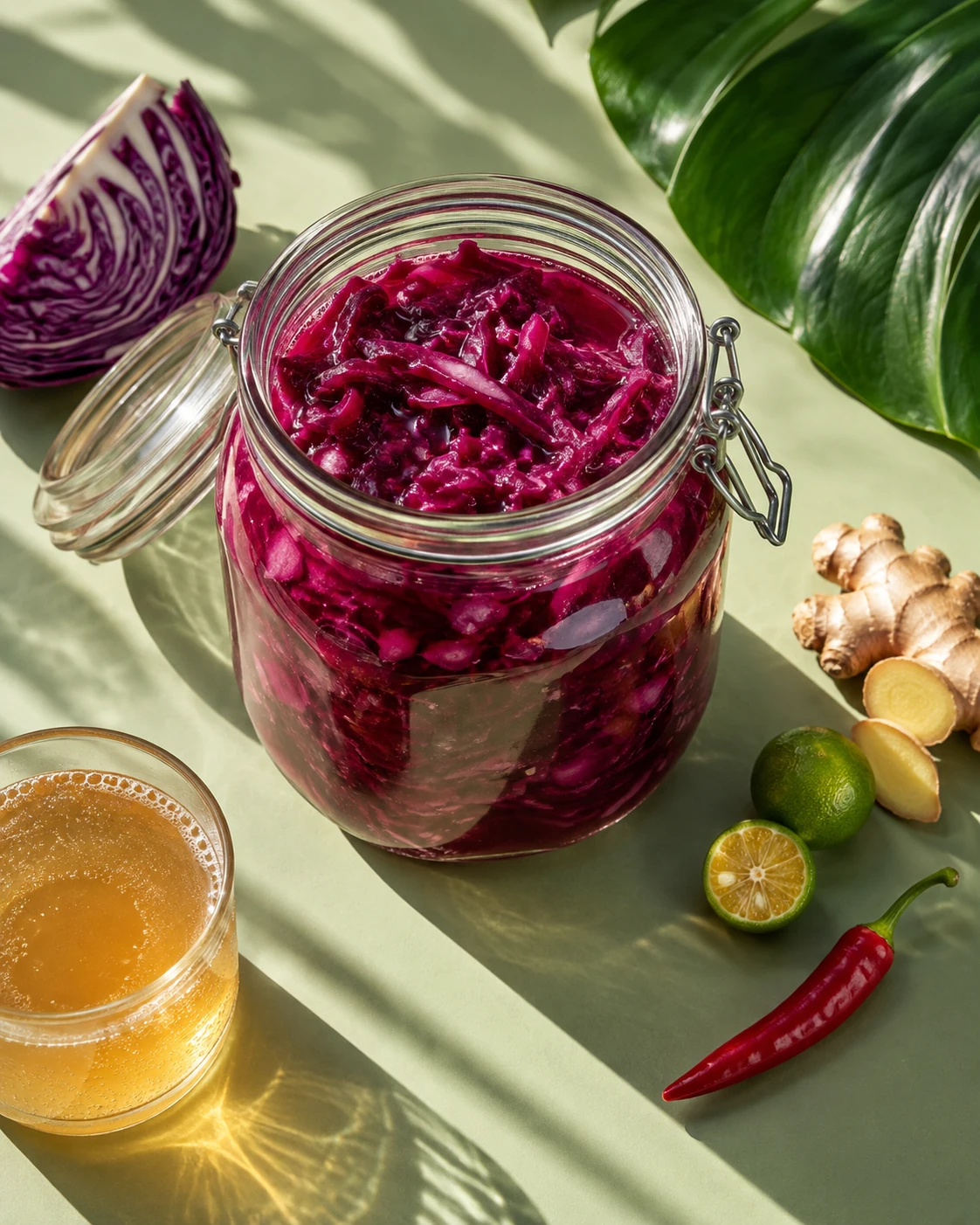
The photograph is a visual direction for the site; the ginger and limes pictured are styling ingredients, not additions to this source recipe.
Classic sauerkraut.
The original batch size is shown here to preserve the source method.
- Source yield
- 9 quarts
- Batch
- 25 lb cabbage
- Temperature
- 21–24°C
- Typical time
- 3–4 weeks
Ingredients
Tick as you prepareThe method
Prepare in portions.
The source works in 5 lb portions, each with 3 tablespoons of the salt. Prepare and shred the cabbage as directed.
Salt, pack, and submerge.
Mix and pack firmly to release juice. Follow the source instructions for the container, brine coverage, weight, and cover.
Follow the full fermentation method.
Use the specified temperature, monitoring, and handling instructions. Consult the original recipe for all details and storage.
A reading summary of the NCHFP sauerkraut recipe, not a substitute for its complete method. This recipe has not been tested by Fermentropics.
The tropical kitchen question.
Can you provide the environment the source requires? Measure before you begin. A kitchen that is warmer than the specified conditions needs a suitable setup; changing the timing alone is not an equivalent method.
Get to know your kitchenBefore the first batch.
Can I add the ginger and lime from the photo?
The image is an art-direction reference. Follow the source recipe as written; these styling ingredients are not part of it.
Can I change the salt quantity?
Follow the tested proportions and type of salt in the original recipe. Do not treat the salt as an optional seasoning.
Where are the complete instructions?
The source below includes the detailed preparation, fermentation, and storage directions. Read it before making the recipe.
Sources & further reading
- National Center for Home Food Preservation ↗ — The complete sauerkraut recipe.